
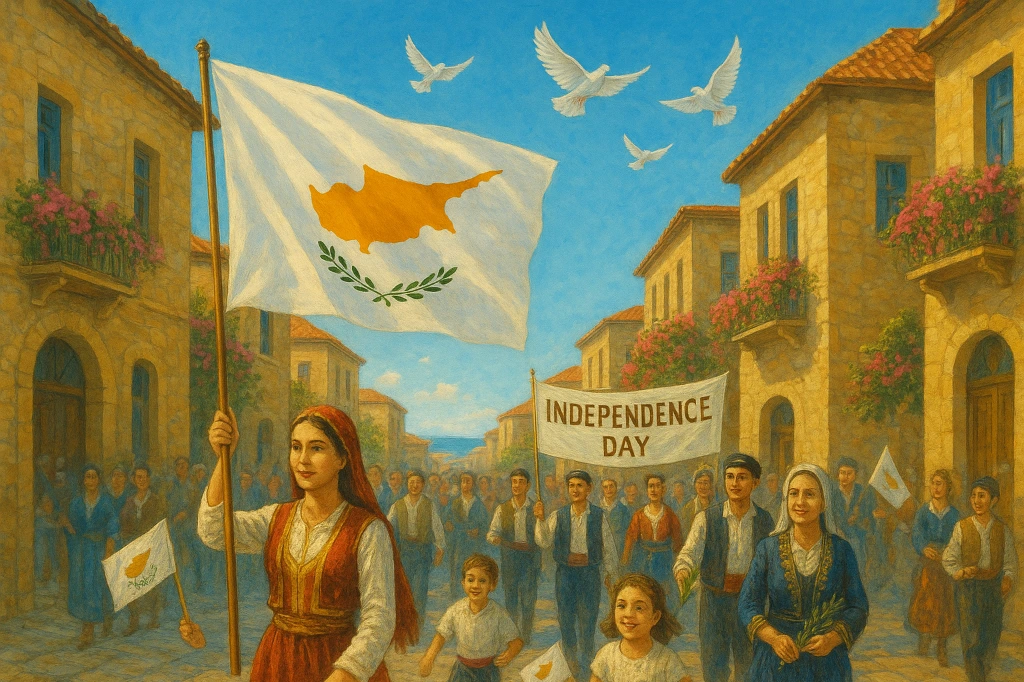
Every year on October 1st, the streets of Nicosia come alive with military parades, flag-waving crowds, and a sense of national pride that runs deep through every Cypriot. Cyprus Independence Day marks one of the most significant moments in the island’s history, yet many visitors and newcomers find themselves curious about what this day truly represents.
Whether you’re planning to witness the celebrations firsthand, teaching your children about their new home’s history, or simply want to understand the cultural fabric of this Mediterranean island, this guide covers everything you need to know about Cyprus Independence Day and how it shaped the nation we see today.
The Long Road to Freedom: Cyprus Under Foreign Rule
To truly appreciate Cyprus Independence Day, you need to understand just how long Cypriots waited for self-governance. The island changed hands more times than most countries in history, passing through Phoenician, Assyrian, Persian, Egyptian, Greek, Roman, Byzantine, and Ottoman control before the British arrived.
The British Empire took administrative control in 1878 through a deal with the Ottoman Empire. In exchange for managing the island, Britain promised to use Cyprus as a strategic base to protect Ottoman interests against potential Russian aggression. However, Cyprus technically remained Ottoman territory until 1914.
Britain quickly recognized the island’s strategic value. The completion of Famagusta’s harbour in 1906 gave the empire a crucial naval position overlooking the Suez Canal, which served as the primary route to India at the time. When World War I broke out and the Ottoman Empire sided with the Central Powers, Britain formally annexed Cyprus on November 5th, 1914.
Britain’s Offer to Greece and the Path to Crown Colony Status
Here’s a fascinating piece of history that many people don’t know: in 1915, Britain actually offered Cyprus to Greece. The condition? Greece had to join the war on Britain’s side. King Constantine I declined the offer, a decision that would shape the island’s future for decades.
The 1923 Treaty of Lausanne saw the Republic of Turkey officially relinquish all claims to Cyprus. Two years later, in 1925, the island became a British crown colony. During this period, thousands of Greek Cypriots enlisted in the British Army and fought in both World Wars. Their motivation went beyond duty to the crown. Many hoped their service would eventually lead to “enosis,” or union with Greece.
| Year | Key Event |
|---|---|
| 1878 | Britain takes administrative control from Ottoman Empire |
| 1906 | Famagusta harbour completed |
| 1914 | Britain formally annexes Cyprus |
| 1915 | Britain offers Cyprus to Greece (declined) |
| 1923 | Treaty of Lausanne signed |
| 1925 | Cyprus becomes British crown colony |
| 1955 | EOKA founded |
| 1960 | Cyprus gains independence |
The Independence Movement: EOKA and the Struggle for Freedom
The push for independence intensified in the 1950s. In 1950, the Church of Cyprus organized a referendum on unification with Greece. While the Turkish Cypriot community boycotted the vote, the majority of participants voted in favour of enosis.
Five years later, in 1955, the National Organisation of Cypriot Fighters (EOKA) was founded. Led by George Grivas, this organization pursued independence from Britain and union with Greece through armed resistance. The struggle was not one-sided. The Turkish Resistance Organisation (TMT) emerged simultaneously, calling for “taksim” or partition of the island. Britain responded to both movements with military force, and the island entered a turbulent period that would last until 1960.
The Historic Night of August 16th, 1960
Independence didn’t come on October 1st, as many assume. The actual transfer of power happened at the stroke of midnight on August 16th, 1960, following the Zurich and London Agreement signed by the United Kingdom, Greece, and Turkey.
That night, British Governor Sir Hugh Foot stood outside the House of Representatives in Nicosia and read the official proclamation. A 21-gun salute echoed across the capital as the Union Jack was lowered for the final time. The agreement allowed Britain to retain the Sovereign Base Areas of Akrotiri and Dhekelia, which remain British territory to this day.
Archbishop Makarios III became the first President of the Republic of Cyprus. His inaugural speech called for unity among all Cypriots and urged the nation to work together in building their new country. His words carried hope for a unified future, though history would take a different turn.
Why October 1st then? The date was chosen as the official Cyprus Independence Day to allow time for the new government to establish itself and organize proper national celebrations.
The Shadow Over Independence: Events of 1974
No discussion of Cyprus Independence Day is complete without acknowledging what came after. The unity Makarios called for proved fragile. In July 1974, Greece’s military junta orchestrated a coup against President Makarios, attempting to force enosis.
Turkey responded by invoking its role as a guarantor power under the 1960 agreements and launched a military intervention. The island has remained divided ever since, with the northern third under Turkish Cypriot administration and the southern two-thirds governed by the Republic of Cyprus.
This history adds a layer of complexity to Cyprus Independence Day celebrations. For many Cypriots, the day represents both pride in their hard-won sovereignty and a reminder of the challenges that followed.
How Cyprus Independence Day is Celebrated Today
Modern Cyprus Independence Day celebrations blend military tradition with community festivities. Here’s what you can expect:
The Military Parade in Nicosia
The centrepiece of celebrations is the grand military parade through central Nicosia. The event typically features:
- Over 1,000 members of the civil service marching in formation
- Military vehicles including a convoy of approximately 14 battle tanks
- Helicopter flyovers demonstrating the nation’s air capabilities
- Representatives from various branches of the armed forces
- School groups and community organizations
The parade route passes through the heart of the capital, with thousands of spectators lining the streets waving Cypriot flags.
Presidential Reception
Following the parade, the President and First Lady host an open reception at the Presidential Palace. This event brings together dignitaries, community leaders, and citizens in a celebration of national unity.
Community Events Across the Island
Beyond Nicosia, towns and villages throughout Cyprus hold their own celebrations:
- School festivals featuring traditional music and dance
- Cultural exhibitions highlighting Cypriot heritage
- Community gatherings with local food and entertainment
- Flag-raising ceremonies at municipal buildings
- Educational programs about the independence movement
Experiencing Cyprus Independence Day as a Newcomer
If you’ve recently moved to Cyprus or are visiting during early October, attending the Independence Day celebrations offers a wonderful opportunity to connect with local culture. Here are some tips:
- Arrive early for the parade as crowds gather well before the official start time
- Bring water and sun protection since October can still be warm
- Respect the solemnity of certain moments, particularly during the national anthem
- Talk to locals who are often happy to share stories and explain traditions
- Check local listings for community events in your area
Schools typically have the day off, making it a perfect opportunity for families to attend celebrations together. Many expat families find that participating in Cyprus Independence Day helps their children understand and appreciate their new home’s history.
The Significance of Cyprus Independence Day for Modern Cyprus
Today, Cyprus Independence Day serves multiple purposes. It honours those who fought for freedom, celebrates national identity, and provides an opportunity for reflection on the country’s journey since 1960.
For the Greek Cypriot community, the day reinforces cultural identity and connection to their history. For newcomers and the international community, it offers insight into the events that shaped this small but strategically important island nation.
The celebrations also remind everyone that Cyprus, despite its challenges, has built a thriving democracy and economy since independence. The country joined the European Union in 2004 and adopted the euro in 2008, achievements that would have seemed impossible during the colonial era.
Conclusion: A Day of Pride and Reflection
Cyprus Independence Day on October 1st represents far more than a public holiday. It’s a day when an entire nation pauses to remember the sacrifices made for freedom and to celebrate the unique Cypriot identity that emerged from centuries of foreign rule.
Whether you’re watching the tanks roll through Nicosia, attending a school festival in Paphos, or simply enjoying the day off with family, take a moment to appreciate the history behind the celebrations. Understanding Cyprus Independence Day deepens your connection to this beautiful island and its resilient people.
Planning to experience your first Cyprus Independence Day? Mark your calendar for October 1st and join the celebrations. It’s an experience that will give you a whole new appreciation for your adopted home.
Frequently Asked Questions
Why is Cyprus Independence Day celebrated on October 1st instead of August 16th?
While Cyprus officially gained independence at midnight on August 16th, 1960, October 1st was designated as the national holiday. This allowed the newly formed government time to establish itself and organize proper national celebrations. October 1st has been observed as Cyprus Independence Day ever since.
Is Cyprus Independence Day a public holiday?
Yes, Cyprus Independence Day is a national public holiday. Banks, government offices, and most businesses are closed. Schools are also closed, and many families use the day to attend parades and community celebrations together.
Can tourists and expats attend the Independence Day parade in Nicosia?
Absolutely. The military parade in Nicosia is open to everyone, and visitors are welcome to watch from designated viewing areas along the parade route. Arriving early is recommended to secure a good spot, and the atmosphere is generally festive and welcoming to all.